
Packaging-level protection for dry food.
ProvisionGard makes the pack itself part of insect control. An insect growth regulator is built into the packaging during manufacture to help protect packaged food from insects in warehouses, shops and the pantry.

Packaging with an active role.
ProvisionGard uses S-methoprene, an insect growth regulator that has protected stored food for decades. Built into the pack at very low levels, it does not kill insects on contact. It disrupts the insect life cycle, helping prevent young insects from developing into adults. This helps stop insects from multiplying inside the pack.
The active sits in the varnish, film or adhesive layer, not in the food. ProvisionGard is EPA registered and FDA compliant, the US EPA has exempted methoprene from residue tolerances on all food commodities, and Eurofins migration testing on treated paper and PET/PE packs measured levels well inside European food-contact limits.
Every pack is different.
Food type, target insects, pack construction, seals and storage temperature all influence performance. That is why we start from your actual pack specification, match the route to your converter’s process and confirm the result in a trial on your own product before commercial supply.
Three ways to build in ProvisionGard.
Coating route
Blended into the overprint varnish or water-based coating on paper packets and pouches at the printing stage.
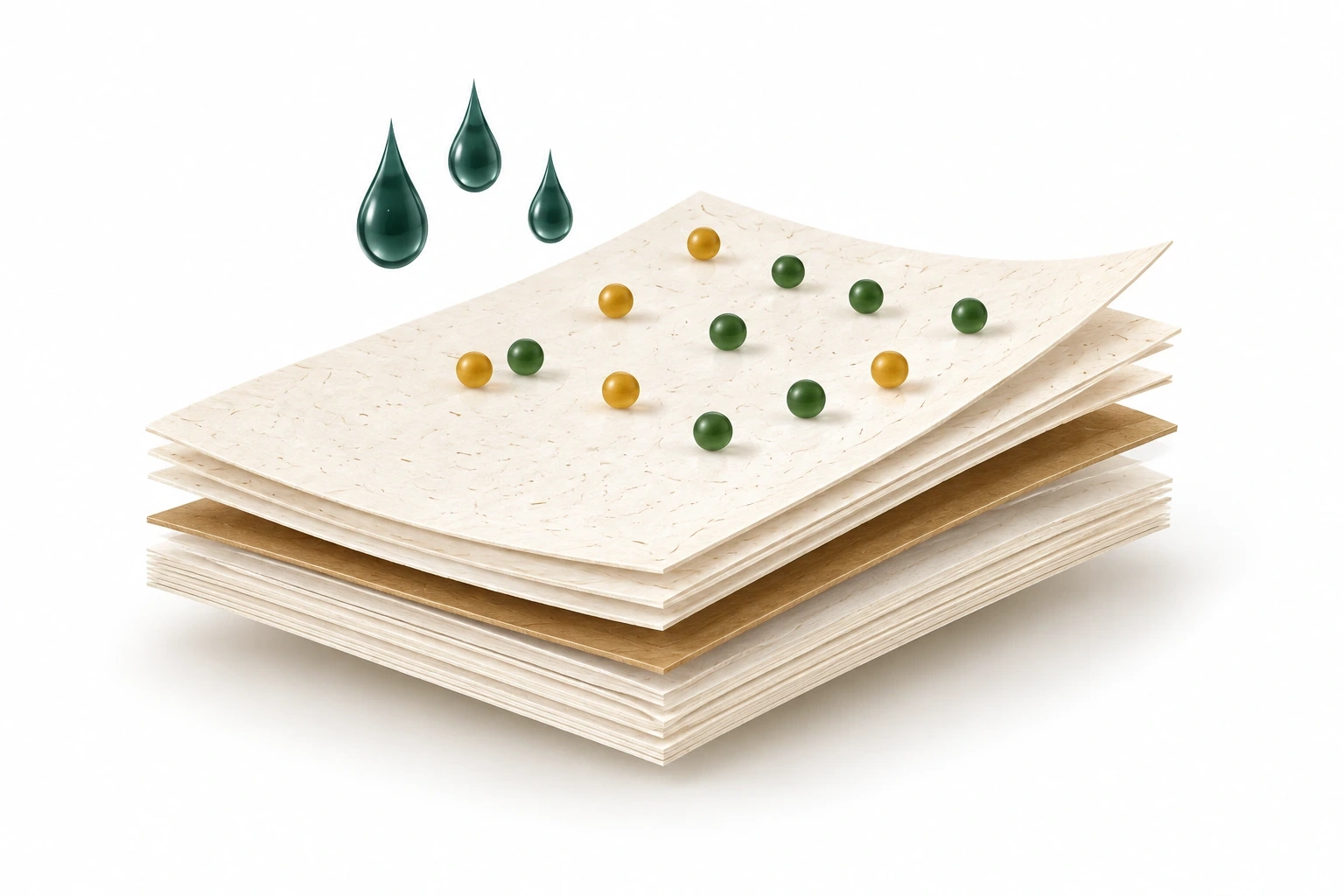
The additive goes into the varnish bucket before the run, mixes in five minutes and runs at normal press speed with the standard anilox. It works with water-based and solvent-based varnishes. This is the route in commercial use for 1 kg and 2 kg maize-meal and flour packets in Kenya.
Film additive route
Food-grade pellets blended into the resin when film is blown or an extrusion-lamination layer is applied.
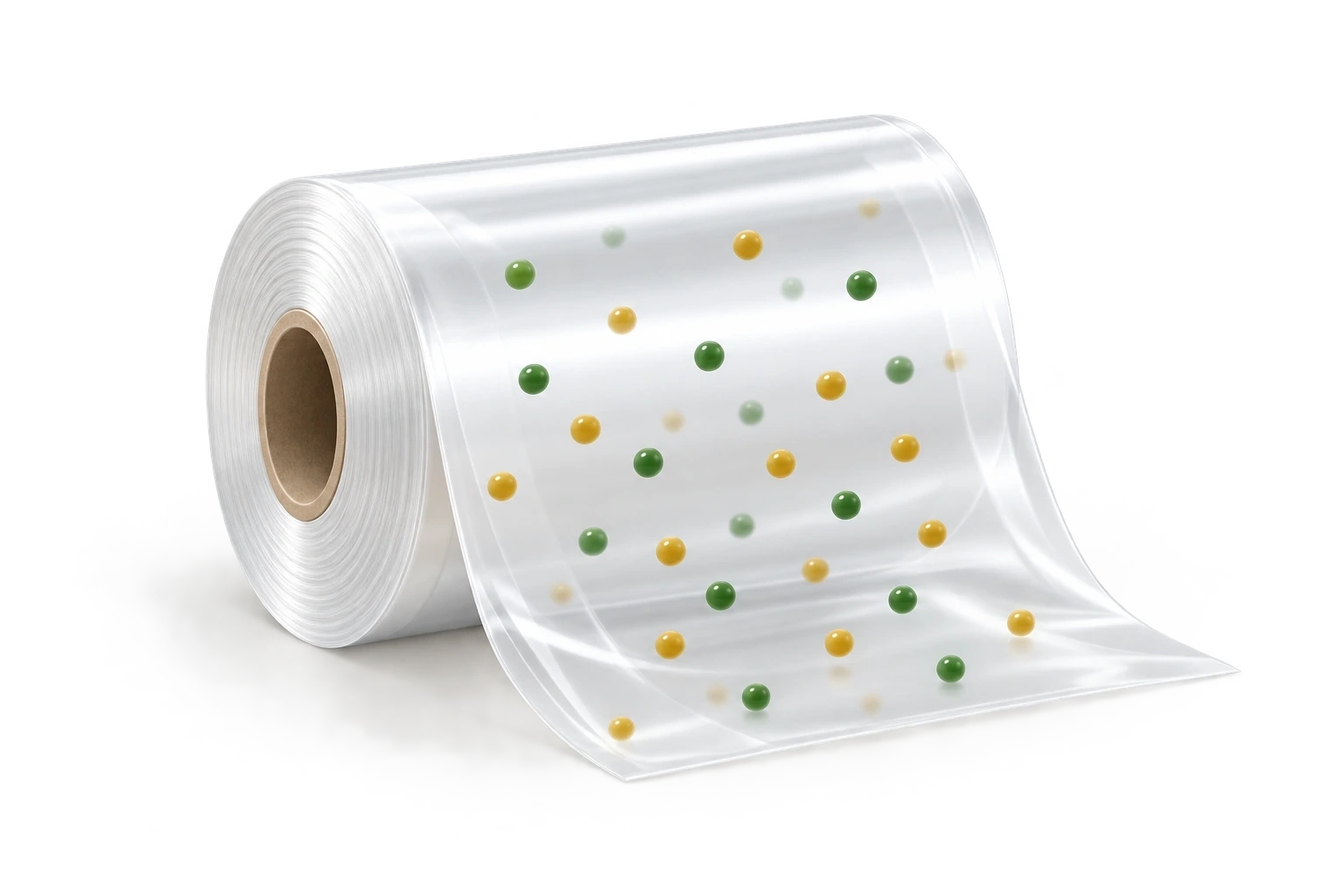
PGT 81086 pellets are added to the masterbatch at low rates, typically under 2%, and can be dosed by hand or gravimetric feeder. The route suits mono and multilayer films and extrusion-laminated structures, and does not affect sealing or adhesion. Samples are checked for active level by the technology owner’s laboratory.
Adhesive route
Added to the solvent or solventless adhesive that bonds the layers of a multilayer laminate, such as a PET/PE pouch.
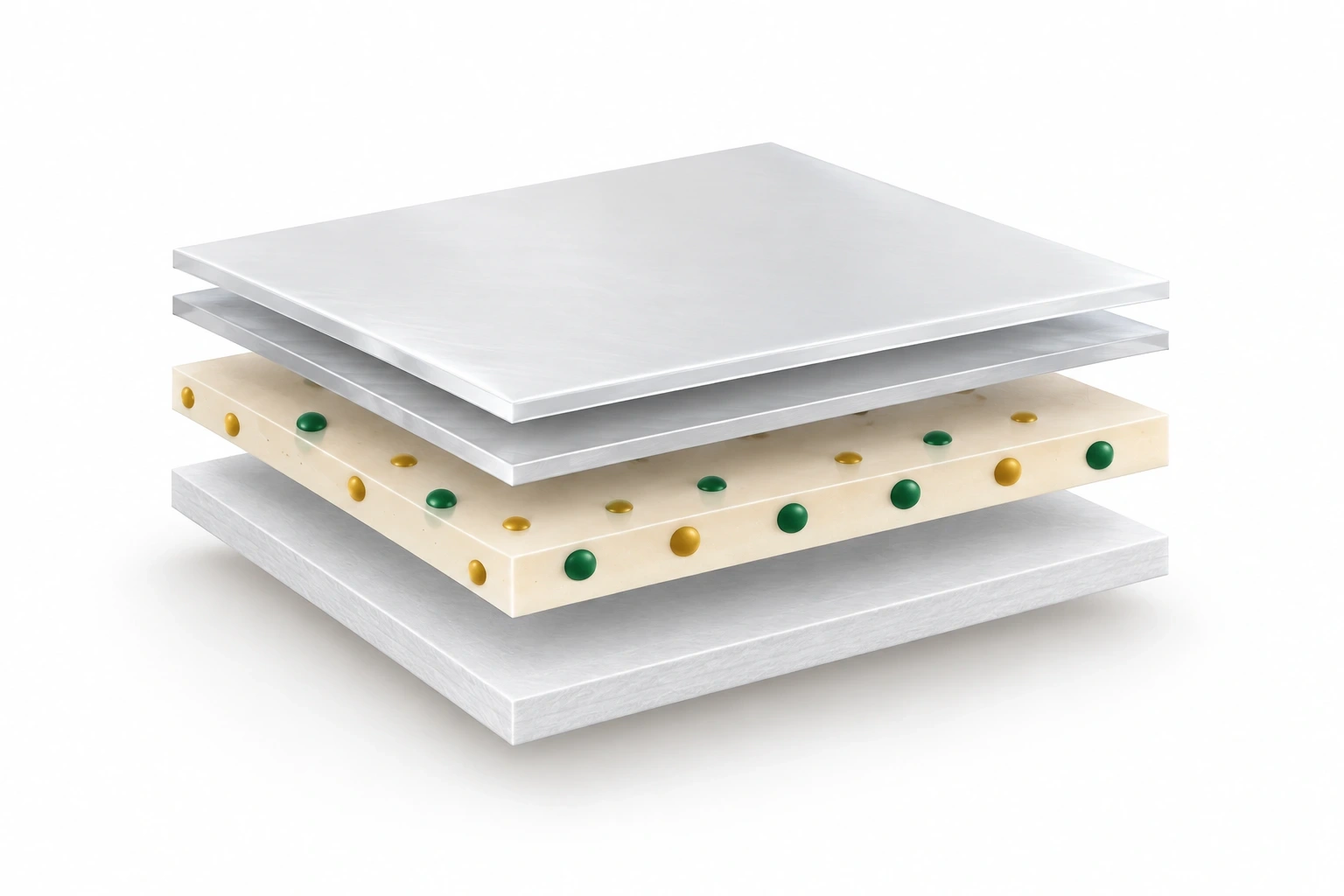
Liquid IGR 30000/A is added to the laminating adhesive at around 1% of adhesive solids, or as the last component of a solventless batch. It mixes with all common adhesive types without separation. The treated adhesive layer sits between the film plies, away from the food-contact surface.
Illustrations show where the active layer sits in each route. They are not to scale and do not represent a specific pack specification.
A practical pathway.
Define the pack
Share the food, pack construction, printing or lamination process, pack size and target market.
Match the route
We match the coating, film or adhesive route to your converter’s process and confirm the addition rate.
Run the trial
Treated and untreated packs are compared side by side on your product under agreed storage and insect-pressure conditions.
Go commercial
Your converter is trained, documentation is completed and treated packs move into normal supply.
Films and laminates, including PET/PE.
Laminated pouches such as PET/PE are protected through the adhesive route. IGR 30000/A goes into the solventless adhesive that bonds the printed PET layer to the PE seal layer, so the active sits between the plies rather than on the food-contact surface. A PET/PE form-fill bag for flour blends built this way was migration-tested by Eurofins, with results well inside European limits.
Where a laminate is made by extrusion rather than adhesive, or the pack is a mono or multilayer film, the same protection comes from PGT 81086 pellets blended into the resin. Published Kansas State University and USDA research on treated PET-PE and PE-PE packaging showed strong suppression of red flour beetle development.
 Official introduction · 1:32

ProvisionGard® is protecting the food the world needs.
ProvisionGard® Technology was founded in 2009 with the purpose of developing unique technologies that solve the ancient problem of insect infestation in our food supply chain. We provide packaging solutions for insect infestation prevention.
In 90 seconds, the technology owner explains what ProvisionGard® is and how it works.
